
7 Signs Your Roof Has Hidden Hail Damage
Muhammad Hassaan bin Irshad · March 20, 2026 · 5 min read
After a hail event in North Texas, a lot of homeowners look up at their roof, see it still in place, and assume everything is fine. That assumption costs thousands of dollars every year.
Hail damage to a roof is frequently invisible from the ground and shows up as leaks three to eighteen months after the storm. By then, the water intrusion has been slow-cooking the decking, insulation, and drywall — and the insurance window may be closing.
Here are seven signs that your roof took a hit, even if you cannot see it from the driveway.
1. Dented Gutters, Downspouts, or Window Screens
This is the easiest sign to check from the ground. Walk around the perimeter and look at every soft-metal surface: gutter lips, downspout seams, AC condenser fins, vent caps, and window screens.
If these surfaces show impact dents, the storm produced hail with enough energy to damage roofing material. Soft metal is calibrated — it dents at the same energy threshold where shingles show granule loss. Dented gutters with no roof damage is rare. Dented gutters with intact shingles should still trigger a professional inspection.
2. Granules in the Gutters After a Storm
Asphalt shingle granules are the protective outer layer that reflects UV and provides fire resistance. When hail strikes, it knocks granules loose.
After cleaning gutters — or after a heavy rain that flushes them — look for an unusual amount of granule accumulation. Some granule loss is normal on older roofs. A sudden spike after a storm is a red flag.
You may also see granule accumulation at downspout outlets where they hit the ground or splash block.
3. Circular Dark Spots on Shingles (Visible Only From the Roof)
This is the primary indicator that requires getting on the roof — or having someone do it for you.
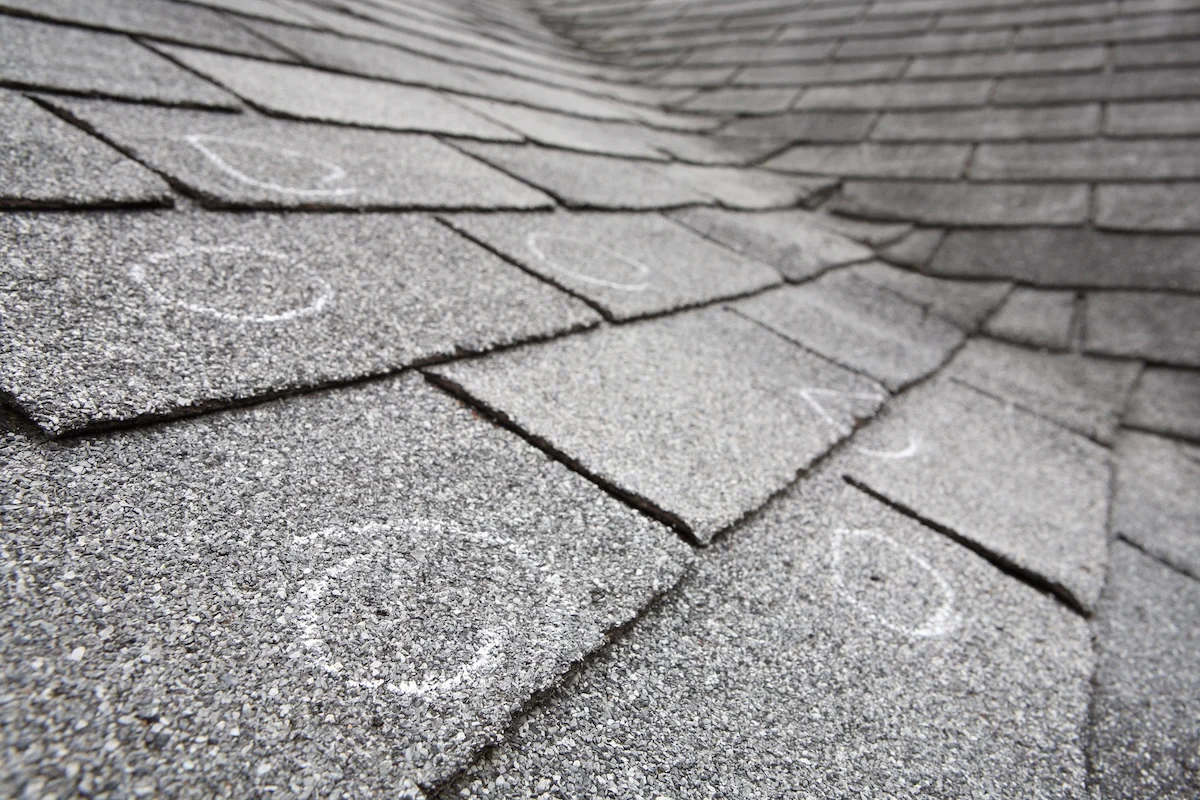
Hail impact marks appear as circular dark spots where the granule surface has been disrupted. The center of the impact shows the black asphalt mat, which weathers and degrades when exposed to UV. Fresh impacts have clean edges; older undetected damage shows frayed edges and darkened exposed mat.
The pattern of impacts is important for the insurance documentation. A legitimate hail event shows consistent circular impacts across the full roof surface, including north-facing slopes that see less UV degradation.
4. Bruised or Cracked Ridge Caps
Ridge caps are the material that covers the apex of each slope. They are among the first places to show hail damage because they receive direct impact from above without any protective angle.
Run your hand along ridge caps after a storm — even with a glove, you can feel raised impact points or soft spots where the mat underneath has been bruised. Cracked ridge caps also allow water intrusion at the highest point of the roof.
5. Damaged or Cracked Pipe Boots and Vent Covers
Pipe boots are the rubber or lead boots that seal around plumbing vents. Hail cracks rubber boots and dents metal vent covers. Even small cracks in a pipe boot allow water intrusion during heavy rain.
On the insurance scope, these are often called "soft metal damage" — they may be separate line items from the shingle damage, but they are part of the same hail claim and should be documented together.
6. Lifted or Misaligned Shingles on Wind-Facing Slopes
Severe hail events are almost always accompanied by strong wind. Wind lifts shingles from the front edge (the tab) while hail is simultaneously hitting from above. The combination — particularly on older shingles where the adhesive seal strip has hardened — causes more widespread lifting than either force alone.
Look at south and west-facing slopes in particular. Lifted shingles allow water under the surface and compromise the waterproofing even before the shingles are broken.
7. Interior Signs: Ceiling Stains, Attic Moisture
By the time you see a ceiling stain, water has been getting in for a while. But ceiling stains after a storm are a definitive sign of roof intrusion, and they should be documented alongside the exterior inspection for the insurance claim.
In the attic, look for water stains on the underside of decking, wet insulation, or daylight visible through the roof deck. These are signs of active intrusion that need immediate attention.
What to Do if You See Any of These Signs
Get a professional inspection before calling your insurer. An inspection provides:
- Photo documentation of every impact mark and soft-metal damage point
- A written report attributable to a specific storm date
- The contractor's presence at the adjuster inspection if you file a claim
Calling your insurer first without documentation means the adjuster is working from their own visual — and adjusters miss damage. Documentation from a contractor present at inspection changes the scope significantly.
Inspections are free. The photo report is yours whether you file a claim or not.
Topcraft Roofs provides free hail damage inspections across McKinney, Frisco, Allen, Plano, Garland, Richardson, Wylie, and surrounding North Texas communities. Schedule yours here.
Muhammad Hassaan bin Irshad
Founder of Topcraft Roofs, a fully insured roofing contractor based in Dallas, Texas, with 9+ years of hands-on roofing experience across the DFW Metroplex.
Frequently Asked Questions
Yes. Granule loss and shingle mat bruising are often only visible from the roof surface at close range. Many homeowners discover hail damage during a sale inspection or when leaks appear months after a storm.

Ready for a free inspection?
One form, two minutes — we will get back to you the same business day.